
“No! Try, not. Do or do not; there is no try.”
(Yoda, The Empire Strikes Back, dir. Irvin Kershner, 20th Century Fox, 1980)

Citrus trees are best put in a container where roots aren’t touching the ground. Soon it will make sense to keep the potting container with drainage holes suspended inside a larger container, and I’ve found that containers made of terracotta or plastic work better than glass or glazed ceramic. Do not let the roots or the container sit in standing water. It might be tempting to bottom water these to mimic the water table of being planted in the ground, but for an indoor lemon tree, I don’t recommend this method. Bottom watering too easily introduces root rot and soil rot, while top down watering lets the water flow out through the soil and container drainage holes. In this case it’s best to not mimic nature and just work with the circumstances of indoor planting.
Because these are still young seedlings (1-2 years) and because I grow indoors exclusively, I just repot when the roots are growing past its current container or when the soil is exhausted, regardless of the time of season. When the tree is more mature (in anywhere from 5-8 years or more), the time of the season will be more important when growing in Zones 6-7. Most sources suggest the sweet spot for this late winter or early spring, when they’re when emerging from seasonal dormancy. Generally, it’s not recommended to re-pot mature trees when fully dormant in the late autumn and winter, and peak season growth could be interrupted by re-potting too late into summer.
Choose a container one size bigger, but avoid an overly large one. Soil will trap excess moisture in an overly large container and create rot. Think of it like buying shoes for growing children; you have to prioritize for short term growth so the shoes stay on their feet today, because jumping straight into adult size shoes would be impractical and counterproductive.
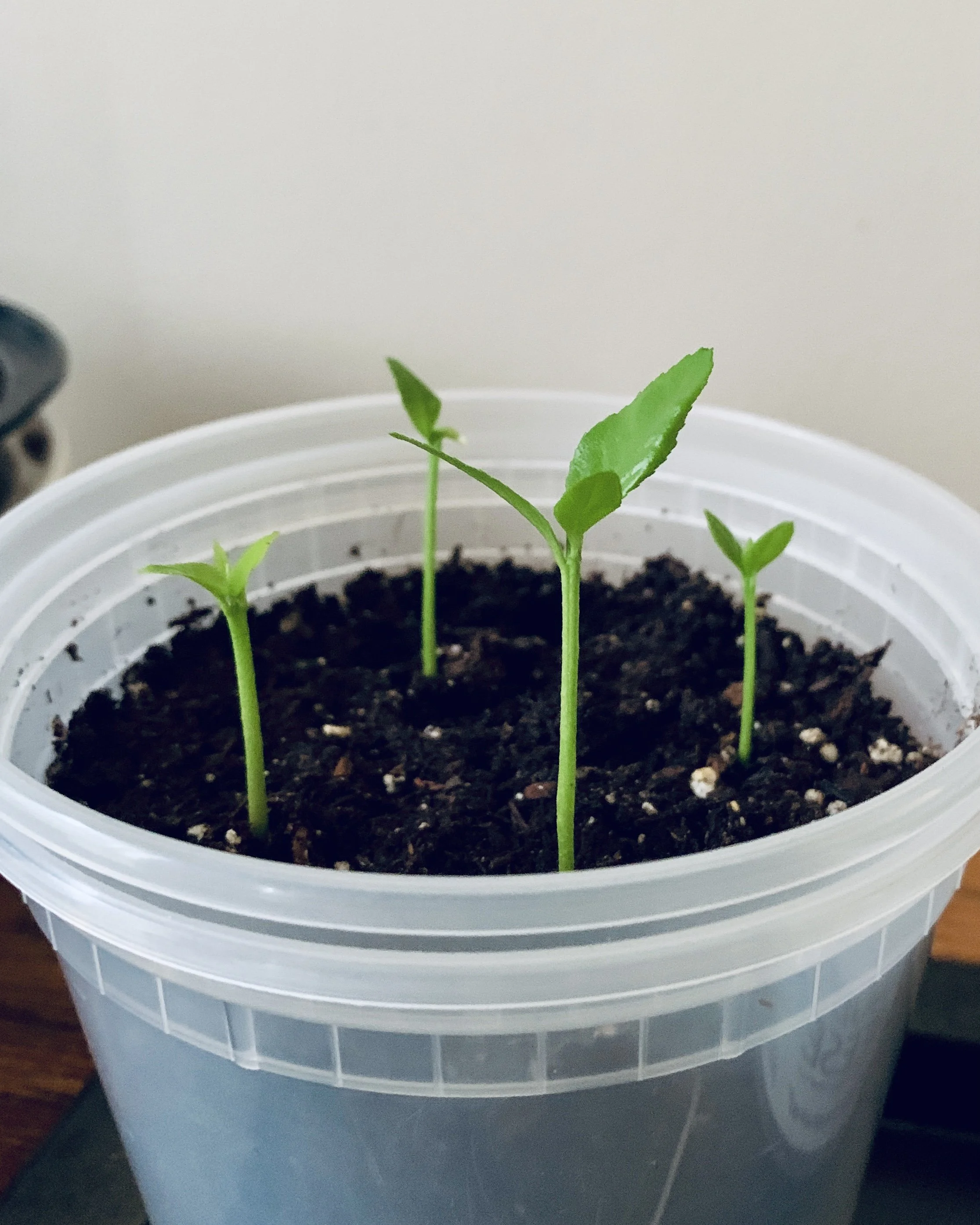
In my first experiment with the very first group of lemon shoots (RIP), I used both tall and deep containers and a shallow and wide one. I noticed the shoots seemed to do better in the tall/deep style. The eldest seedlings (currently 2 years old and between 9-12 inches tall) have been in tree pots since late 2025. I did this to encourage downward taproot development, minimize root circling, and encourage vertical growth. After they outgrow the tallest tree pot I have, I will probably look into a larger and wider container for the growing tree.



🪴⏳📏🗓️📈
I’ve had to improvise soil mixtures and ratios over the past two years to find what works best. The wrong soil mixture is probably the second biggest reason why I lost so many seedlings at the earliest stages. Growing indoors in containers makes creating a healthy soil ecosystem from first principles challenging. Through trial and error, I currently use a combination of a very chunky Orchid mix, NYC’s finest compost, perlite, vermiculite, earthworm casings, soil acidifier, and a tiny sprinkling of Osmocote fertilizer.
Initially each seedling was planted with the following mixture: Miracle Grow Cactus, Palm & Citrus Potting Mix, Espoma Organic Soil Acidifier, beach sand, Osmocote flower & vegetable plant fertilizer, and diatomaceous earth (fungus gnat prevention).
I found that a very chunky orchid specific soil mix is much better than the cactus mix, and they’re not interchangeable. The orchid mix is primarily wood bark pieces that allow for drainage, whereas the cactus mix tends to have more moss and potting soil. These major differences enable different types of root development, and citrus trees need lots of drainage space and to retain less water than more. I now also use a significant amount of perlite and vermiculite to aid drainage.
In August 2025, I introduced NYC compost to the soil mix, and this past spring of 2026, I introduced worm castings to the mix. Both are going over very well so far. Citrus trees are heavy feeders, so at first I thought that giving them more fertilizer would be better, but this was a mistake because the seedlings frequently got fertilizer burn, so I stopped adding it to the soil mix. The compost and worm castings are a much better, healthier source of nutrients than fertilizer. Now I just apply fertilizer topically as needed, which is much less frequently than I thought.
I stopped using beach sand because it wasn’t doing anything significant and was getting heavy to transport. So far I’ve found that whatever the regular sand was doing could be done better by perlite and vermiculite. A very coarse horticultural sand, or even chicken grit, might be a “nice to have” option in the future, but regular sand is not an absolute necessity.
Diatomaceous earth is something I add topically to the surface on an as-needed basis to keep fungus gnats away. But it gets very mushy and muddy when wet, and is no longer effective, so I don’t add it to the soil mix anymore.
I add soil acidifier because citrus trees generally do better in acidic soil. If you’re not familiar with this brand of acidifier, the way Espoma works is the sulfur chips are dissolved by organisms in the soil which convert it to sulphuric acid. The gypsum counteracts the development of toxic soluble aluminum that results from acidifying the soil. The Espoma brand is a “slow release” formula that takes about 6 months to reach potency. Other types of acidifiers are available, your mileage may vary.